HALOK turns a high-risk lid opening process into a controlled sequence.
This operational guide explains how bolt retention and indexing prevent lid removal under pressure while allowing safe venting as a warning if residual pressure remains.
The Operational Risk
Traditional bulk pot closures can be dangerous during lid opening if residual pressure remains. The risk peaks at the end of the process—when only one or two bolts are still holding the lid. If the pot is still pressurized at that moment, the lid can fail violently.
What HALOK Changes
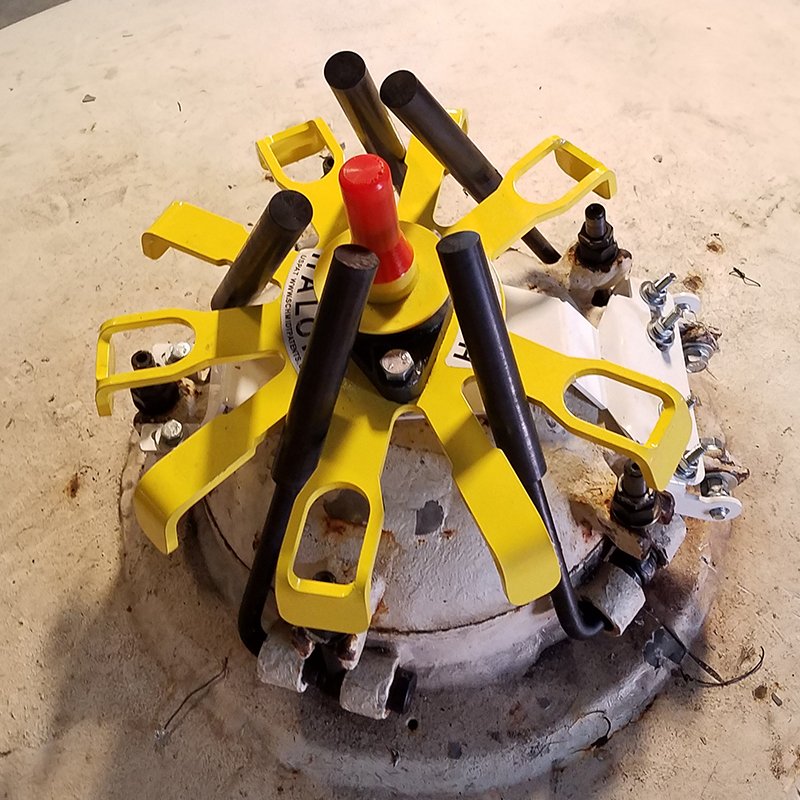
HALOK is a visible safety device designed to enforce the correct sequence by preventing bolt removal until the system is ready to open.
Procedural Enforcement Through Mechanical Constraint
- As cam-lock handles are pulled down, bolts remain trapped within their lugs
- An operator cannot remove bolts early and “work around” the intended sequence
- This reduces the chance of reaching the final bolts while pressure still exists
The Indexing Requirement
HALOK will not index (unlock) until the very last cam-lock handle has been pulled down:
- Sequential locking prevents partial or out-of-order opening
- Only after full handle engagement can the system index into the unlock position
Fail-Safe Venting as a Warning
If pressure remains after handles are down but bolts are still retained:
- The lid can lift slightly while bolts remain secured
- Pressure can vent audibly and visibly as a warning signal
- The lid cannot fly off because the bolts stay in the lugs
Why This Matters
HALOK transforms lid opening from a judgment-based task into a mechanically enforced sequence, helping protect operators from catastrophic pressurized vessel accidents during refilling and maintenance.
 My Account